
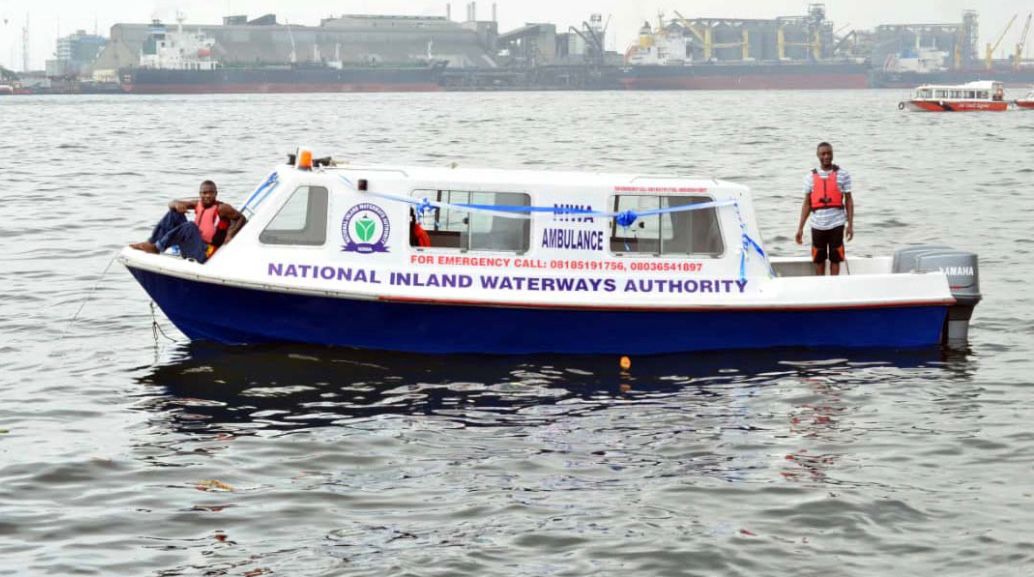
The National Inland Waterways Authority (NIWA) has stepped up its safety enforcement and awareness campaigns across Lagos waterways as part of renewed efforts to eliminate boat accidents and improve compliance with safety regulations among passengers and boat operators.
The intensified campaign is aimed at promoting safer water transportation, reducing avoidable mishaps, and ensuring that commuters using Lagos waterways adhere strictly to safety guidelines, especially the compulsory use of life jackets.
Speaking during a meeting with members of the 2026 Dockworkers’ Day Committee of the Shipping Correspondents Association of Nigeria in Lagos, the Lagos Area Manager of NIWA, Sarat Braimah, explained that the agency has been directed to strengthen public sensitisation efforts across all jetties and waterways in the state.
According to her, the renewed safety drive follows directives from the Acting Managing Director of NIWA, Yusuf Girei, who has made the protection of waterway users a major priority of the agency’s operations nationwide.
Braimah stated that NIWA is determined to ensure that passengers, boat operators, and every stakeholder involved in water transportation fully comply with established safety standards in order to prevent recurring boat mishaps.
She explained that the authority has launched massive awareness campaigns this period to educate water users on the importance of obeying safety regulations while travelling on the waterways.
Speaking on the initiative, Braimah stressed that safety remains the major focus of the current NIWA leadership. She explained that the agency’s management wants every commuter and operator on Nigerian waterways to remain safe at all times.
According to her, the authority has been instructed to intensify sensitisation programmes aggressively so that the target of recording zero boat accidents can become a reality.
Braimah also noted that the continuous awareness programmes have started yielding positive results, especially in Lagos where commuters are becoming more conscious of safety procedures during water transportation.
She revealed that many passengers now actively monitor compliance and report operators or fellow commuters who violate safety regulations, particularly those refusing to wear life jackets while travelling.
The NIWA official explained that this growing level of public participation shows that the authority’s awareness campaigns are gradually changing attitudes and improving safety consciousness among water transport users.
According to her, commuters now understand the risks associated with negligence on the waterways and are becoming more willing to cooperate with safety officials.
Braimah further disclosed that regular inspections carried out by NIWA’s Marine Department have also contributed significantly to improving safety conditions across Lagos waterways.
She explained that boats operating on the waterways undergo routine inspections every quarter to ensure they remain seaworthy and safe for passengers.
According to her, the inspection process has helped reduce the number of faulty and unsafe boats operating within the state, making water transportation more secure for commuters.
The Lagos Area Manager also revealed that the Federal Ministry of Marine and Blue Economy is currently working closely with NIWA on plans to gradually phase out wooden boats from water transportation operations.
She explained that the move is part of broader government efforts aimed at modernising the country’s water transport system and improving safety standards across inland waterways.
However, Braimah acknowledged that replacing wooden boats completely cannot happen overnight because many operators still depend on them for their livelihoods.
She explained that the government is approaching the transition gradually to avoid creating economic hardship for operators and workers within the water transport sector.
According to her, authorities are trying to balance safety improvements with the realities faced by local operators, adding that the government is engaging stakeholders while introducing safer alternatives in phases.
Braimah also disclosed that additional government investments in modern and safer boats under current budgetary allocations would support the gradual transition away from wooden vessels.
On the issue of revenue generation, the NIWA official stated that the agency has continued to exceed its financial targets over the years despite operational challenges within the sector.
She explained that NIWA has recorded major growth in internally generated revenue and disclosed that the authority has doubled the amount it generated compared to figures recorded three years ago.
According to Braimah, the improved revenue performance reflects increased efficiency in operations and stronger enforcement activities across the waterways sector.
The renewed safety campaign comes amid growing concerns over recurring boat accidents on Nigerian waterways, particularly in Lagos and other riverine communities where water transportation remains a major means of movement for thousands of residents daily.
Industry stakeholders have repeatedly called for stricter enforcement of safety measures, improved regulation of operators, mandatory use of life jackets, and replacement of unsafe boats in order to reduce fatalities associated with water transport accidents.
With the latest campaign, NIWA says it remains committed to improving safety standards, protecting passengers, modernising water transportation infrastructure, and ensuring that waterways across Lagos and other parts of Nigeria become safer for commuters and operators alike.