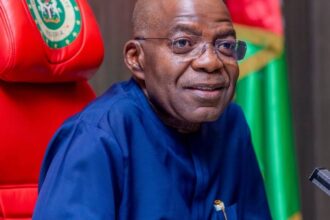
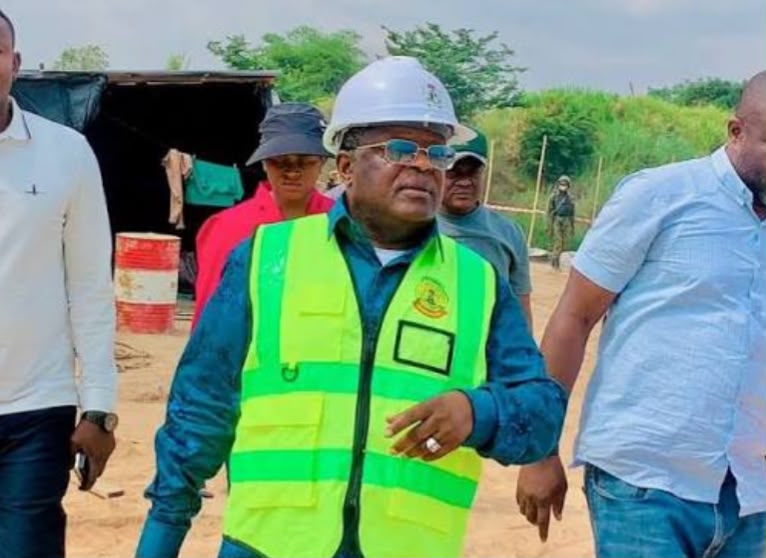
Minister of Works, David Umahi, has defended the Federal Government’s massive investment in road infrastructure, saying President Bola Tinubu’s legacy highway projects are designed to boost economic growth, agriculture, trade and industrial development across Nigeria.
Speaking during the Renewed Hope Media Tour in Ebonyi State, Umahi said the projects are not just roads but strategic economic corridors that will connect different regions of the country and unlock new business opportunities.
The minister also revealed that the government is constructing what he described as Africa’s longest flyover near the Dangote Refinery and Lekki Deep Sea Port corridor to tackle future traffic congestion caused by increasing industrial activities in the area.
According to him, the flyover forms part of the ongoing Lagos-Calabar Coastal Highway project, which is expected to improve transportation, logistics and trade along the coastal region.
Umahi disclosed that the 1.3-kilometre Ndi-Egbe Bridge linking Ebonyi and Cross River states has reached about 45 percent completion and is expected to be completed by December 2026. He described the bridge as a key component of the administration’s broader plan to connect Nigeria’s six geopolitical zones.
The minister acknowledged that funding delays and technical challenges slowed work on some projects but assured Nigerians that President Tinubu had approved payments to contractors, which would accelerate construction activities.
He further highlighted the economic benefits of the Lagos-Calabar Coastal Highway, Sokoto-Badagry Superhighway and the Calabar-Abuja Trans-Sahara Highway, noting that the projects would support irrigation farming, housing development, tourism, manufacturing and power generation.
Umahi warned against calls to halt the projects, insisting they are long-term investments capable of transforming Nigeria’s economy, creating jobs and strengthening regional trade.