
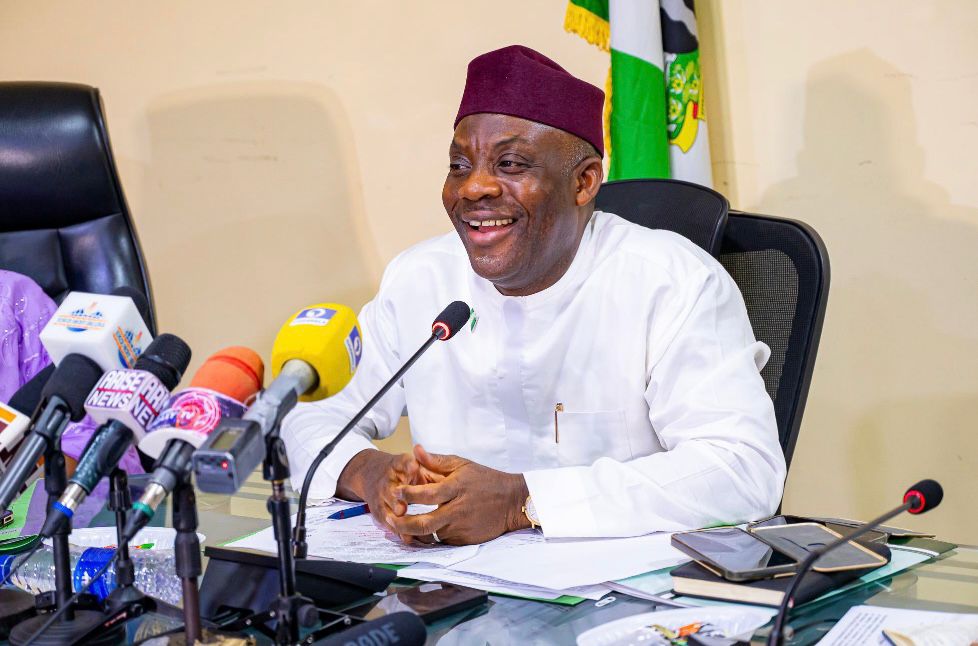
Education Minister Defends Scrapping Of BEA Programme, Raises Concerns Over Abuse, Waste Of Public Funds
The Federal Government has declared that there will be no reversal of its decision to scrap the Bilateral Education Agreement scholarship scheme, insisting that Nigeria now has enough educational capacity to train students locally without spending billions sponsoring them abroad.
Minister of Education, Dr Tunji Alausa, made the position of the government known during an interview with Saturday PUNCH, where he defended the cancellation of the long-running foreign scholarship programme.
According to the minister, many of the courses Nigerian students were being sponsored to study overseas are already available in universities and tertiary institutions across the country, making the programme unnecessary and financially wasteful.
Alausa questioned why government funds should continue to be spent sending students abroad to study courses that can easily be obtained in Nigeria, especially at a time the country is battling economic challenges and rising education costs.
The minister argued that it made little sense for the government to sponsor students with thousands of dollars to countries such as Morocco, Niger Republic and Sudan for courses like English, Mass Communication and Sociology, despite Nigerian universities already offering the same programmes.
He specifically expressed concern over situations where Nigerian students were reportedly sent to French-speaking countries to study English Language, describing the arrangement as unreasonable and difficult to justify.
According to him, the government can no longer continue spending about $10,000 on a single student to study abroad when similar courses are available locally at far lower costs.
Alausa stressed that the administration had no intention of bringing back the programme, insisting that the decision to discontinue it was final.
The minister explained that the BEA scholarship scheme was originally introduced many decades ago when Nigeria lacked the infrastructure and institutional capacity to offer certain specialised courses, particularly in science, engineering and technology.
However, he noted that the country’s education sector has significantly expanded over the years, with Nigerian universities now offering virtually all the programmes that previously required foreign training.
He further alleged that the scheme had gradually become heavily abused over the last decade, claiming that scholarships were being awarded for courses already available in Nigeria instead of highly specialised disciplines.
According to him, investigations also uncovered cases where some beneficiaries allegedly collected scholarship funds without even remaining in their host countries.
The minister disclosed that the government found evidence suggesting that some students who were supposed to be studying abroad were actually living in Nigeria while still receiving sponsorship funds.
He described the development as a form of corruption and abuse of public resources, adding that the programme had drifted far from its original purpose of academic exchange and international educational cooperation.
Despite scrapping the scheme, Alausa assured that the Federal Government would continue sponsoring students currently benefiting from the programme until they complete their studies abroad.
He explained that the government remained committed to fulfilling its obligations to existing beneficiaries and would not abandon them midway through their academic programmes.
The government’s decision reportedly followed growing concerns over the rising cost of maintaining the scholarship scheme, with Nigeria’s budget for the programme increasing from N3.2 billion in 2022 to about N8 billion in 2025.
The Federal Government officially announced the cancellation of the Bilateral Education Agreement scholarship programme in April 2025, maintaining that public funds would now be redirected toward strengthening local tertiary institutions and improving education within Nigeria.




