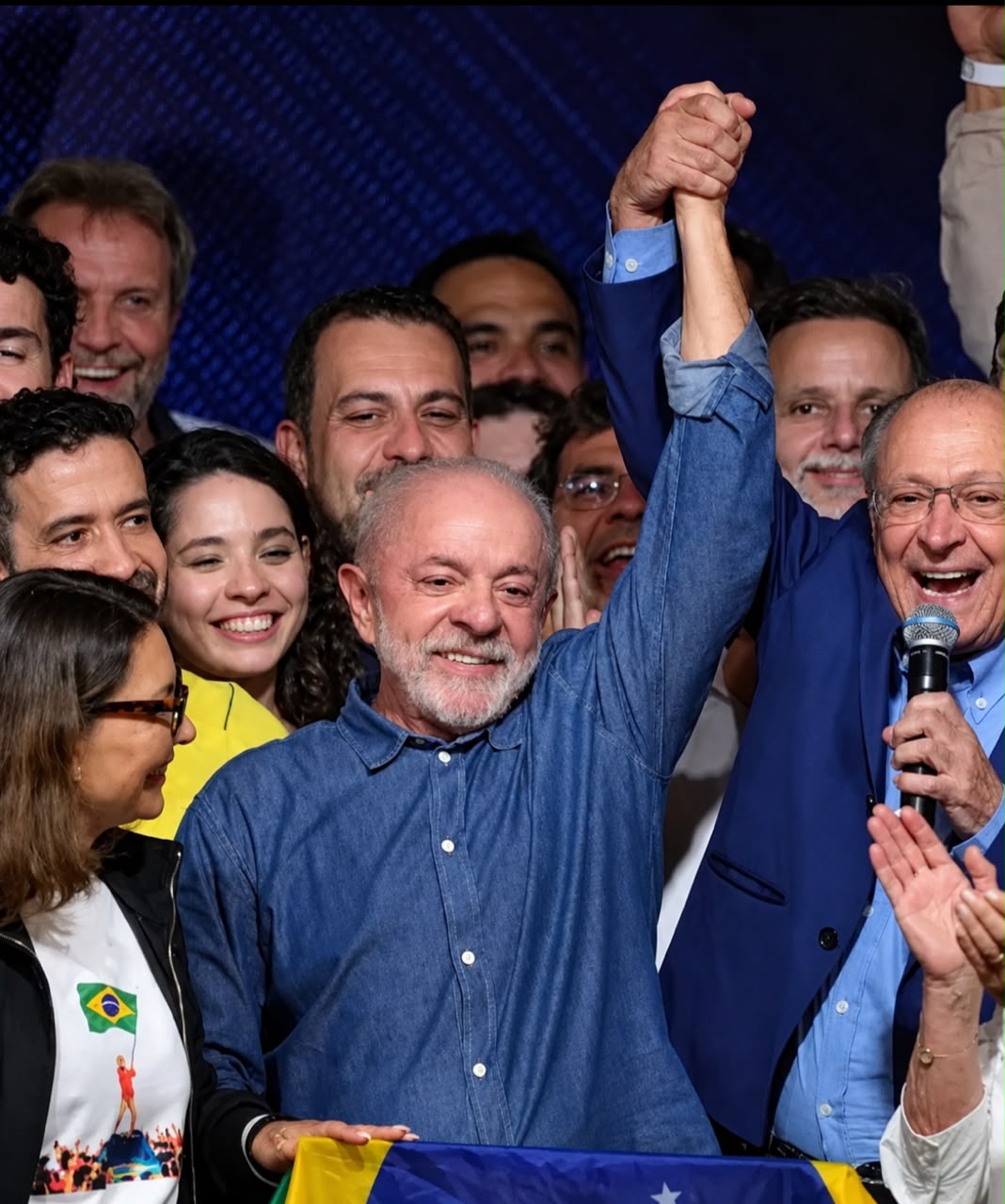
Brazilian President Luiz Inácio Lula da Silva has secured a historic fourth presidential term after defeating right-wing challenger Flávio Bolsonaro in a closely contested election, extending his leadership of Latin America’s largest economy for another four years.
Lula won 51.79 per cent of the valid votes, receiving 64,256,232 votes, while Bolsonaro secured 59,826,041 votes, representing 48.21 per cent, according to Brazil’s electoral authority. The result gives Lula a margin of approximately 4.4 million votes. (Tribunal Superior Eleitoral)
The victory marks a remarkable political comeback for the 80-year-old leader, who had trailed Bolsonaro in the first round of voting earlier in October. Lula overturned the deficit in the run-off, becoming the first Brazilian president elected to four terms. (Portal da Câmara dos Deputados)
The election was also marked by controversy over voting arrangements. A Supreme Court justice ordered polling stations in some areas to remain open for an additional two hours following complaints about public transportation difficulties and heavy rain. Bolsonaro subsequently challenged the decision, although electoral authorities maintained that the extension did not affect the outcome. (AP News)
Lula’s victory gives him another four years to pursue his domestic and international policy priorities, including his pledge to end deforestation in Brazil by 2030. His administration has made environmental protection a central part of its agenda, following a decline in forest loss during his current term.
The president first took office in 2003 and served two consecutive terms until 2011. After leaving office, he returned to power in 2023 following his victory over Jair Bolsonaro, Flávio’s father, in the 2022 presidential election.
Jair Bolsonaro was later jailed over his role in a failed coup plot following his electoral defeat, adding to the political tensions surrounding the Bolsonaro family and its supporters.
A setback for Trump and the right
Flávio Bolsonaro’s defeat represents a setback for his family and United States President Donald Trump, who has supported right-wing political movements across Latin America.
Lula has previously warned against American interference in Brazil’s political affairs and has emphasised the country’s right to determine its own political direction.
The election result is expected to influence Brazil’s position on environmental protection, climate diplomacy and Indigenous land rights, as Lula seeks to maintain his international profile on climate-related issues.
Brazil hosted the 30th United Nations Climate Change Conference, known as COP30, in Belém in 2025, highlighting Lula’s efforts to position the country as an important voice in global climate negotiations.
His administration has also pledged to implement Brazil’s commitments under the Paris Agreement and support the transition towards cleaner energy. However, plans to expand domestic oil production have drawn criticism from environmental advocates, who argue that continued fossil fuel development could undermine the government’s climate ambitions.
Lula’s ability to advance his environmental agenda may also face challenges from a right-leaning Congress, particularly on legislation concerning deforestation, conservation and Indigenous land rights.
Maurício Voivodic, executive director of WWF-Brazil, said Lula’s victory presented an opportunity to continue progress on environmental protection and strengthen the country’s international role in climate and biodiversity conservation.
“Lula’s victory offers an opportunity to sustain the reduction in deforestation and strengthen Brazil’s international role on climate and biodiversity,” Voivodic said.
He also expressed concern that the composition of the new Congress could create obstacles to advancing environmental protection measures.
Lula’s new term is expected to begin in January 2027, with the president facing the challenge of maintaining his environmental commitments while navigating a politically divided country and a Congress that could limit his proposed reforms. (Senado Federal)