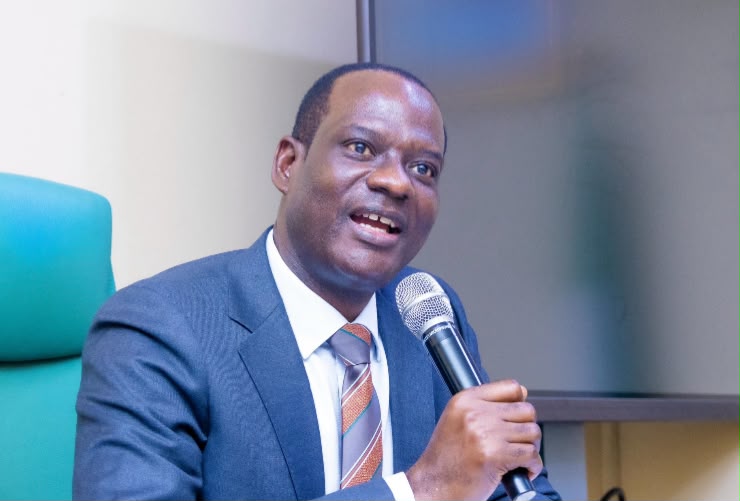
Minister of Finance and Coordinating Minister of the Economy, Taiwo Oyedele, has said state and local governments receive about 85 per cent of Nigeria’s resources, leaving the Federal Government with only 15 per cent despite its extensive responsibilities.
Oyedele made the statement on Wednesday during a discussion on Nigeria’s economic outlook, ongoing reforms and prospects for inclusive growth at Chatham House in London.
According to the minister, the Federal Government faces significant financial constraints because of the wide range of responsibilities it must fulfil, including defence, internal security, foreign affairs and the conduct of elections.
He added that the Federal Government also gets involved in basic education and primary healthcare, arguing that it needs more resources to effectively carry out its duties.
“Based on data, the center is the most deprived of resources yet it has the most responsibilities. Of all Nigerian resources, roughly 85 percent are assigned to subnational. Only 15 percent to the federal government,” Oyedele said.
He also stated that the Federal Government does not collect personal income tax from individuals, while highlighting how revenue from value-added tax (VAT) is distributed.
According to him, state governments receive 90 per cent of VAT revenue, while the Federal Government gets 10 per cent. He added that states also retain revenue from stamp duties, leaving the Federal Government largely dependent on its share of the Federation Account.
Oyedele argued that the commonly cited allocation of 52.68 per cent to the Federal Government does not represent its share of all government revenue but applies to the revenue available in the Federation Account.
Under Nigeria’s current revenue allocation formula, the Federal Government receives 52.68 per cent, state governments get 26.72 per cent, and local governments receive 20.60 per cent.
On February 3, the Senate began moves to amend relevant provisions of the 1999 Constitution to increase the Federal Government’s share of revenue through a review of the existing allocation formula.
The Senate has argued that the Federal Government requires additional funds to meet its expanding responsibilities, despite receiving the largest share under the current formula.
Oyedele also disclosed that the Federal Government plans to transfer some responsibilities to state governments, arguing that states are better positioned to handle certain areas while allowing the centre to improve its revenue-generating capacity without placing additional financial pressure on Nigerians.
“That way you have extra resources to influence decisions at the subnational level. It’s called federal transfers,” the minister said.
Under the proposed arrangement, the Federal Government could provide funding to states for improving basic education, supporting agriculture and constructing access roads that connect farms to markets.
Oyedele said the transfers could encourage state governments to prioritise projects with direct economic and social benefits instead of spending heavily on other infrastructure.