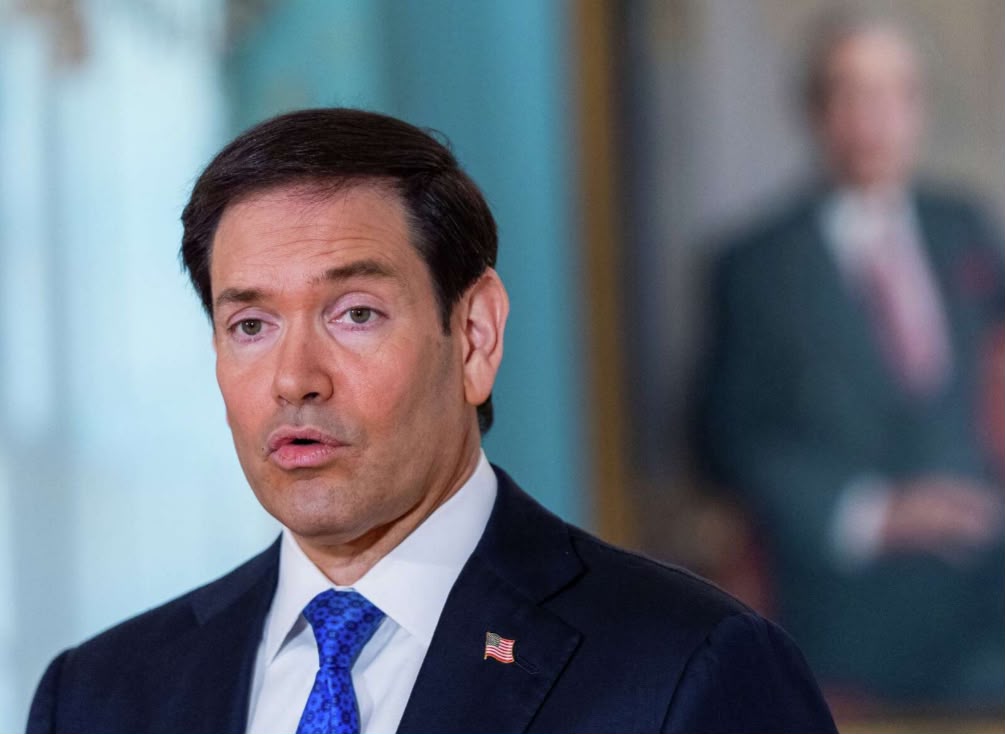
US Secretary of State Marco Rubio arrived in India on Tuesday as Washington and New Delhi work towards finalising a comprehensive trade agreement following President Donald Trump’s decision to delay tariffs on imports from the South Asian nation.
Rubio’s two-day visit will take him to the western Indian cities of Mumbai and Jamnagar, where he is expected to meet government officials and business leaders as discussions over trade and energy cooperation continue.
Among those scheduled to meet Rubio are India’s Foreign Minister, S. Jaishankar, and billionaire Mukesh Ambani, chairman of Reliance Industries, which operates the world’s largest refining complex in Jamnagar.
Rubio arrived in Mumbai, India’s financial capital, where he was expected to meet Jaishankar later on Tuesday.
In recent days, Rubio and other US officials have indicated that a comprehensive trade deal between the two countries is close to completion, raising the possibility that an agreement could be signed during his visit.
Trump’s Tariff Decision Removes Major Obstacle
One major obstacle to the negotiations was removed last Friday when Trump waived potential tariffs that could have penalised India for its substantial purchases of Russian crude oil.
Legislation signed by Trump in September authorised his administration to impose tariffs of up to 100 per cent on the five largest importers of Russian oil. India ranks second on the list after China.
Trump’s decision to waive the bill’s substantive provisions has drawn criticism from both Democratic and Republican lawmakers who have urged him to increase economic pressure on Moscow over its war against Ukraine.
Rubio said the ongoing effort to finalise a trade agreement with India was one of the factors behind the administration’s decision to waive the tariffs.
He also noted that India had been diversifying its energy imports away from Russian crude, although the country continues to purchase millions of barrels of Russian oil daily.
According to Rubio, the US administration would begin a 60-day review period to assess which additional tariffs, if any, should be imposed.
“You’ve got countries like India, for example, that have voluntarily diversified their energy portfolio, but are still getting a substantial amount of energy from Russia because it’s hard to pivot from one day to the next,” Rubio said on Sunday.
“But they’re also an important ally and partner of the United States.”
US-Russia Diesel Deal Raises Questions Over Oil Pressure
The Trump administration has previously pressured India to reduce its purchases of Russian oil. However, Washington signed a deal with Russia last week to import diesel in an effort to lower domestic fuel prices ahead of the US midterm elections.
The move has raised questions about how much priority the administration continues to place on restricting other countries’ purchases of Russian energy.
Asked about India’s continued reliance on Russian crude on Monday, Rubio said countries had to consider several factors when deciding where to obtain their energy supplies.
“Every country has a complex set of factors that they have to take into account,” Rubio told reporters.
“Geography is real. For some countries, it’s very difficult to acquire energy from alternative sources.”
India imports more than 85 per cent of the crude oil it requires to power its rapidly expanding economy, making access to affordable and reliable energy supplies a major consideration in its foreign policy.
Rubio’s visit to India follows his trip to Samarkand, Uzbekistan, where he held meetings with political and business leaders from Central Asia.
His discussions in India are expected to focus on strengthening bilateral relations as both countries seek to conclude a trade agreement, while differences over energy imports and relations with Russia remain part of the broader diplomatic picture.