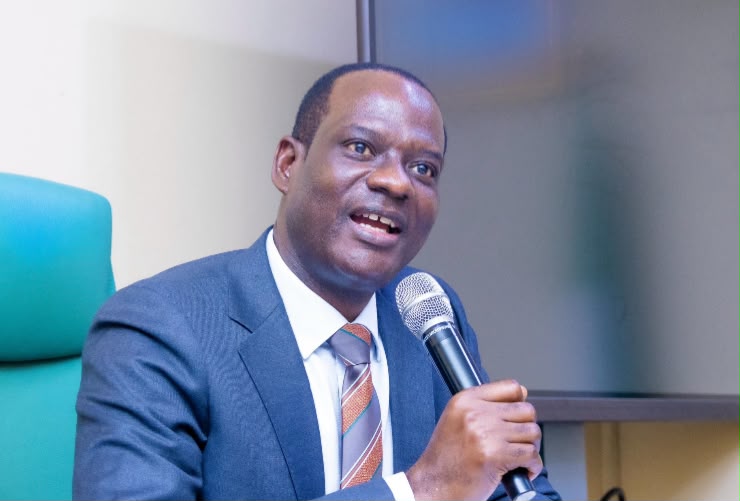
Nigeria’s economic reforms have boosted investor confidence, with financial markets and international investors anticipating that President Bola Tinubu could secure a second term in 2027 and continue his economic policies, Finance Minister Taiwo Oyedele has said.
Oyedele, who also serves as the coordinating minister of the economy, said investors were increasingly concerned about whether political developments surrounding the next general election could disrupt the government’s reform programme.
He made the remarks during a press briefing alongside Central Bank of Nigeria (CBN) Governor Olayemi Cardoso at the 2026 International Monetary Fund (IMF) and World Bank annual meetings in Bangkok, Thailand.
According to the minister, investors have been factoring in the possibility of Tinubu’s re-election and expect the current economic policies to remain in place.
“The markets and the international community have been pricing in the prospect of a second term for the President, and they expect continuity in the reforms,” Oyedele said.
He explained that investors had questioned whether election-related pressures could force the government to abandon some of its economic decisions.
“They ask, ‘Are you under pressure because of elections?” he said.
However, Oyedele insisted that the reforms were designed to place Nigeria’s economy on a more sustainable path rather than serve as a strategy to secure political support.
“It is not because I am trying to help Mr President win re-election,” he said.
No Return to Fuel Subsidy or Multiple Exchange Rates
Oyedele warned that reversing the reforms could undermine investor confidence, encourage capital flight and put renewed pressure on the naira.
He maintained that the Federal Government would not restore petrol subsidies or return to a multiple exchange rate system.
“There will be no return to fuel subsidies or multiple exchange rates,” he declared.
The minister also clarified that a recent petrol discount introduced by NNPC Retail should not be mistaken for a return to government-funded fuel subsidies.
According to him, the discount was a commercial decision that allowed the company to reduce its profit margin as part of its business strategy.
He cautioned that reversing the reforms would carry significant economic consequences, potentially prompting investors to withdraw their funds and placing additional pressure on the foreign exchange market.
Oyedele said Nigeria could not afford to return to the economic conditions that existed before the reforms.
Government Targets 7% Economic Growth
The finance minister also expressed confidence that Nigeria could outperform economic growth projections by the IMF and World Bank.
He argued that although the forecasts of international financial institutions were important, Nigeria should pursue more ambitious targets to create jobs, increase incomes and reduce poverty.
“The IMF and the World Bank make projections based on the information and assumptions available to them. We respect their work, but our ambition cannot be limited to their projections,” he said.
Oyedele reiterated that the government was targeting economic growth of 7 per cent, stressing that achieving the goal would require tackling the factors driving up production costs.
He identified food, energy and logistics expenses as major obstacles to business expansion and investment.
According to him, reducing these costs would help control inflation, improve productivity and create a more favourable environment for businesses.
The minister also said the government wanted inflation to fall to low single digits, which could create room for lower interest rates and make borrowing more affordable for businesses.
He explained that high inflation often contributes to elevated interest rates, making it difficult for companies to secure loans at costs that allow them to operate profitably.
Nigeria Presents $78.5bn Investment Opportunities
Oyedele disclosed that Nigeria had presented 65 investment projects worth a combined $78.5 billion to prospective investors.
The proposed projects cover several sectors, including energy, transportation, manufacturing, mining, agriculture, healthcare and urban services.
He said attracting private investment into these areas would support economic expansion and create employment opportunities.
However, the minister stressed that the success of the reforms should ultimately be measured by their impact on ordinary Nigerians, rather than improvements in economic indicators alone.
He said the government must ensure that businesses can expand, employment opportunities increase and citizens experience tangible improvements in their daily lives.
“Stability is earned, and growth is a task. It is not enough to say that the numbers are improving. We must ensure that growth creates jobs, that businesses are able to expand and that Nigerians can see the benefits in their daily lives,” Oyedele said.
He urged Nigerians to recognise the opportunities emerging from the reforms, adding that consistent economic policies would be essential to maintaining investor confidence and achieving stronger growth.