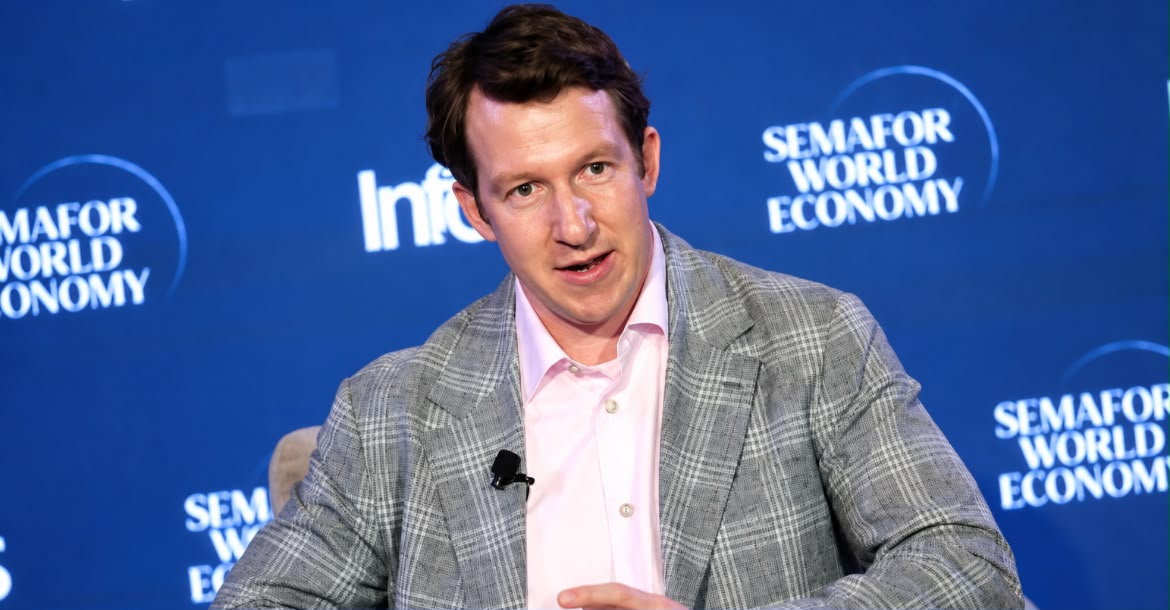
Artificial intelligence could dramatically expand the United States economy to $44 trillion by 2030, according to Jack Clark, co-founder of AI company Anthropic, who says rapidly advancing technology is expected to accelerate economic and scientific progress.
Clark made the remarks on Saturday during the International Monetary Fund and World Bank annual meetings in Bangkok, Thailand, where he called for international cooperation to establish strict rules governing the development and use of advanced AI systems.
He said one of Anthropic’s internal economic models projected that US economic output could rise to $44 trillion by 2030, compared with its current level of just over $30 trillion.
Clark acknowledged that the forecast might appear difficult to believe but argued that the continued improvement of AI capabilities could support such significant economic growth.
“I know, but it’s implicated by the technology continuing to get better,” he said, responding to concerns about the scale of the projection.
He explained that achieving such an expansion would likely require major breakthroughs in scientific discovery, alongside the emergence of entirely new industries and inventions.
“If GDP were to grow this much, then economic doctrine suggests that new industries and inventions would need to have been created to power such a major economic expansion,” Clark said.
The Anthropic co-founder stressed that AI’s influence would extend across multiple sectors as its capabilities improve, potentially bringing faster changes to businesses, research and the wider economy.
However, he also emphasised the need for countries to work together to manage the technology’s growing influence and address the risks associated with its rapid development.
Clark called for “unusual and serious rules” to govern AI, arguing that international cooperation would be necessary as the technology becomes increasingly transformative.
His comments highlight the growing debate over AI’s potential to drive economic growth while raising questions about the safeguards needed to manage its impact.