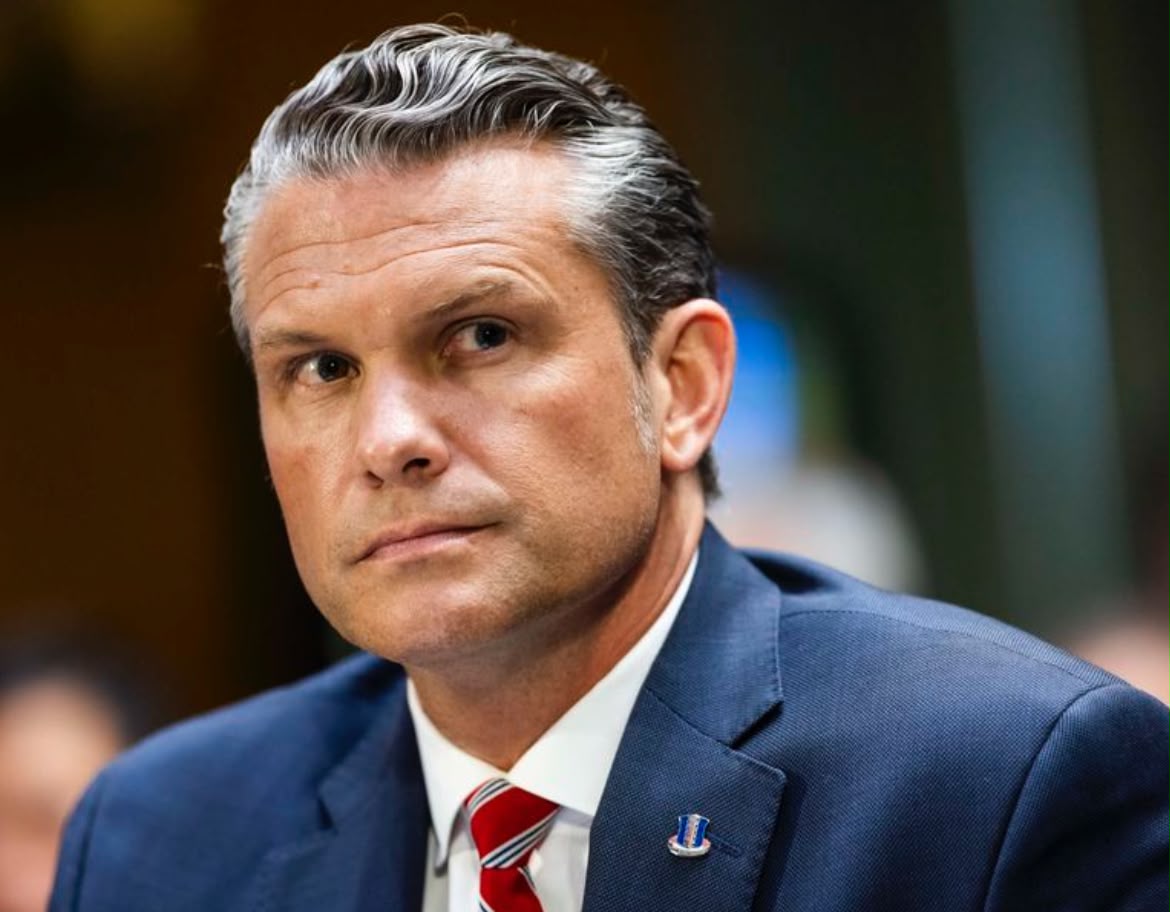
US President Donald Trump has rejected Defense Secretary Pete Hegseth’s controversial plan to livestream the execution of Nidal Hasan, the former US Army psychiatrist convicted of killing 13 people at Fort Hood in 2009.
The decision came on Thursday after the proposal attracted criticism from Republican lawmakers, religious leaders and international observers, with several Pentagon officials reportedly relieved that the broadcast would not go ahead.
Hegseth, a former Fox News host, had announced plans to make the execution public, arguing that it would demonstrate the consequences of carrying out such attacks.
Trump initially appeared receptive to the idea, suggesting that broadcasting the execution could serve as a warning to potential attackers. However, he ultimately decided against allowing the event to be streamed.
“Many very good and well meaning people would rather not watch him die, through streaming, or through any other visual device,” Trump wrote on Truth Social.
He added that Hasan would still face execution as scheduled, but the event would not be broadcast.
A White House official said Trump had not known about Hegseth’s plan before it became a subject of public debate. The controversy has raised questions about communication between the president and his defence secretary.
Despite the disagreement, the Pentagon sought to downplay any suggestion of a serious rift between the two men.
Pentagon chief spokesperson Sean Parnell said Hegseth supported the president’s decision and insisted that both remained aligned.
Republican strategists also suggested that the disagreement might not significantly affect their relationship. Veteran Republican strategist Charlie Black said Trump had made the right decision and predicted that the controversy would soon fade from public attention.
Growing Questions Over Hegseth’s Leadership
The controversy comes as Hegseth faces scrutiny over his leadership of the Pentagon, with some Republican lawmakers and congressional aides raising concerns about his qualifications and proposed military policies.
Since taking office, Hegseth has received Trump’s public support while pursuing changes within the Defence Department, including the removal of senior military officers.
However, tensions have emerged between the defence secretary and some members of Congress. One Republican lawmaker filed articles of impeachment against Hegseth last month, accusing him of exceeding his authority by ordering military action against Iran without congressional approval.
Although the measure is not expected to succeed, Democrats could pursue impeachment proceedings if they gain control of the House of Representatives in the November elections.
The dispute over the proposed livestream has also drawn attention from Democratic Senator Mark Kelly, who introduced legislation seeking to prohibit the broadcasting of executions.
“Livestreaming an execution is un-American and dangerous. It is the kind of thing we see with regimes like Iran and the Taliban in Afghanistan,” Kelly said.
Execution to Proceed Without a Broadcast
Hasan, now 56, was convicted of premeditated murder after opening fire at a medical facility at the Fort Hood military base in Texas in 2009. The attack killed 13 people and wounded 32 others.
He was shot by police during his arrest and now requires a wheelchair.
Death penalty experts say a government execution has never been broadcast or livestreamed in the United States. The US military has also not carried out an execution by firing squad since 1945.
Hegseth had argued that allowing the public to witness Hasan’s execution would demonstrate that serious crimes carry severe consequences. Trump, however, ultimately concluded that broadcasting the death would go too far.
The president’s decision has prevented an unprecedented public execution broadcast, although Hasan’s execution is still expected to take place as scheduled.