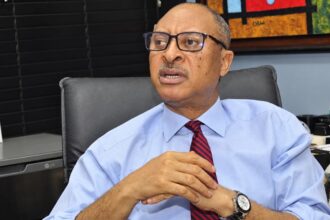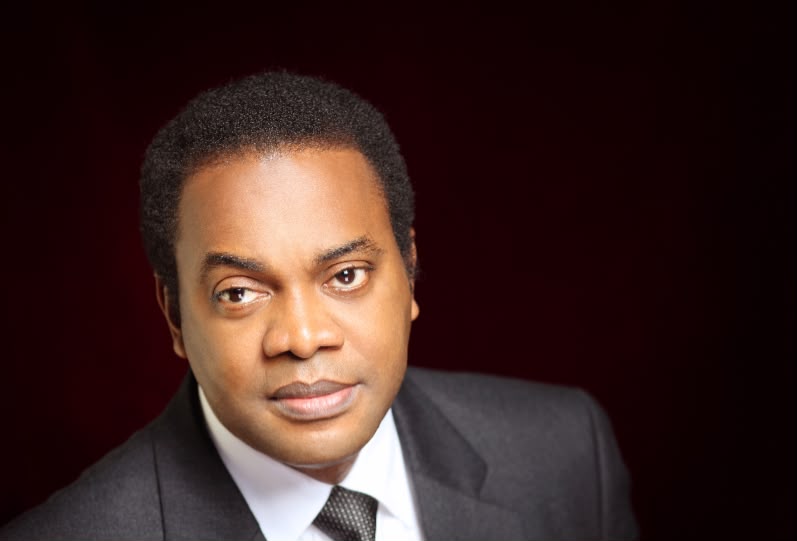
Peoples Redemption Party (PRP) presidential candidate and former Cross River State governor, Donald Duke, has called for intense scrutiny of anyone seeking to become Nigeria’s president in 2027, saying the country can no longer afford experimental leadership.
Duke argued that the nation’s worsening economic and security challenges require Nigerians to carefully examine the experience, capacity, track record and plans of every candidate before handing them the responsibility of governing the country.
“I don’t think we should be testing. We’re in such dire states right now. We should actually grill whoever wants to take any responsible position in the public space today,” he said.
The former governor described Nigeria’s current situation as a disaster but maintained that the country could still recover if its direction was changed.
“We’re already in a disaster. This is a disaster. But it’s repairable,” Duke said.
Duke, who governed Cross River State from 1999 to 2007, pointed to his administration’s experience as an example of how governments can create economic opportunities by identifying and developing the strengths of their respective territories.
He recalled that his administration sought to demonstrate that each part of Nigeria could build a strong economic base by taking advantage of its natural and other resources.
“We wanted to prove that every federating unit in this country could also be an economic unit,” he said.
According to Duke, Cross River’s development strategy focused on sectors where the state had clear advantages, particularly agriculture and tourism.
He said agriculture offered the state significant potential because of its large land mass, while tourism was pursued despite doubts that it could become a major economic driver.
“So we took our strengths, right? Agriculture, we have incredible land mass. But beyond that, we took a low-hanging fruit like tourism, which everyone thought wouldn’t work. And it worked spectacularly. It can be done. That can-do spirit has been proven before,” he said.
Duke’s View on What Government Should Do
The PRP candidate said the central responsibility of government should be to create a secure and orderly environment where citizens can be productive and improve their standard of living.
“The main essence, the main function of government is the optimal productivity of our citizens within a safe and orderly environment,” he said.
Duke argued that government should not simply be about administering people, but about creating the conditions necessary for citizens to thrive.
“I think that’s what the government is all about. Not just for people to administer or supervise over people, but to ensure that they are productive within a safe and orderly environment,” he added.
He said investments in education, healthcare and infrastructure should ultimately produce a more productive population and better living conditions.
“That’s why we send kids to school. That’s why we send them to hospitals. We build infrastructure. All towards the productivity of our citizens. That is the mission statement of the government,” Duke said.
He also argued that governments should support legitimate economic activities capable of improving livelihoods, regardless of whether they fall into traditional ideas of major industries.
“Once you have something that legitimately others want — and the word here is legitimately — then you’re productive,” he said.
“If by preparing Afang soup, we can get our people living a good life, not below the poverty level, go for it.”
Duke Defends Tinapa Project
Duke also defended Tinapa, the major tourism and business project developed during his tenure as Cross River governor.
He argued that the project should be assessed based on the circumstances surrounding its creation and the condition in which he handed over the state rather than solely on what happened to it afterward.
“Tinapa was one thing that you built in Cross River. It was a dream. To the extent that it was commissioned a month before I left office, it was successful. Going forward, I think the question should be addressed to those who took over from me,” he said.
Duke Criticises Tinubu’s Governance
Speaking about President Bola Tinubu’s administration, Duke acknowledged Tinubu’s political experience and described him as a formidable politician, but said his concerns were about governance rather than political ability.
“He’s a formidable politician. My issue with him is governance, not politics. He’s been a senator, he’s been a two-time governor. Give it to him,” Duke said.
He argued that his concern was the condition of Nigerians, particularly what he described as rising poverty and worsening insecurity.
“If we continue this way, where year after year poverty increases, statistically, not our statistics, international statistics, year after year we’re getting poorer, year after year our security is impaired,” he said.
Duke pointed to insecurity in northern Nigeria and warned that the problem was spreading southward.
“There are sections of the country that are getting poorer faster than other sections of the country. You’ve got to mitigate that. And he’s not taking us in that direction,” he said.
However, Duke rejected the suggestion that criticising Tinubu’s administration meant he believed he was personally superior to the President.
“No. I didn’t say I’m better. I didn’t say I’m better. I’ll put in place a better governance structure than Bola Tinubu. That’s my conviction,” he said.
Duke Speaks on Opposition Coalition
Duke also said any opposition coalition preparing for the 2027 election should not be built solely around the objective of removing the incumbent.
According to him, opposition parties must first agree on a common vision for Nigeria before deciding which individual is best positioned to lead the coalition.
“But we also have to have sincerity of purpose. It’s not just to remove one and put another face,” he said.
“The first thing is getting a commonality in objectives. Where do we want to take Nigeria to? Where do we think Nigeria ought to be at this time? Who best amongst the coalition partners can articulate that vision?”
He warned that simply bringing together politicians who are unhappy with the incumbent government without agreeing on a clear alternative programme would not serve Nigerians.
“It shouldn’t be seen as a bunch of people trying to unseat a government or impose someone else. No, that would be wrong. And that would be shortchanging Nigerians,” Duke said.
He maintained that the coalition must first agree on where it wants to take the country before selecting the person capable of delivering that vision.
“We must agree on where we ought to take Nigeria to and find a fitting vehicle to take us there,” he said.
Duke added that once the coalition had agreed on its objectives, the next step would be determining which candidate was best equipped to execute the agreed programme.
“First of all, once we have a commonality and objective, the next question is who is best suited for this?” he said.