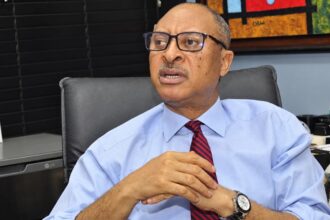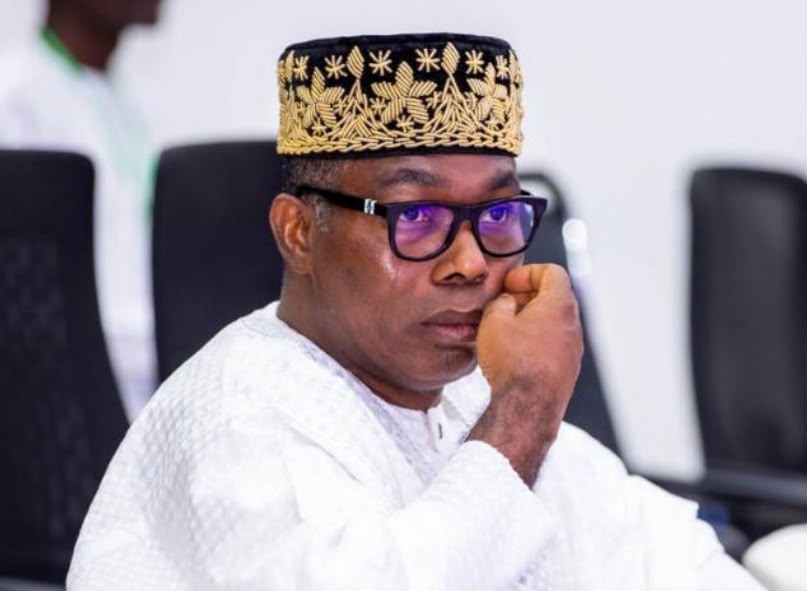
Presidential candidate of the Social Democratic Party (SDP), Prince Adewole Adebayo, has warned that petrol could cost as much as ₦5,000 per litre if President Bola Tinubu secures a second term in office.
Adebayo based his projection on the current direction of the Federal Government’s economic policies, particularly the deregulation of the downstream petroleum sector and the continued floating of the naira. His comments were contained in a statement issued by his campaign’s Chief Communications Adviser, Comrade Mark Adebayo, on Wednesday.
The SDP candidate argued that the policies were placing additional pressure on the economy and said a significant change in economic policy would be required to prevent further increases in fuel prices.
He identified the depreciation of the naira as one of the major factors behind his projection, noting that imported petrol is priced in US dollars.
“Petrol in Nigeria is imported and priced in United States Dollars ($). As long as the Central Bank allows the Naira to float without strong local production backing it, the currency will continue to weaken,” he said.
Adebayo further projected that if the exchange rate reaches ₦3,500 to $1 in the coming years, the landing cost of petrol alone could exceed ₦4,000 per litre.
“If the exchange rate hits ₦3,500 to $1 in the coming years, the landing cost of fuel alone will exceed ₦4,000. You cannot have economy illiterates running your country and expect the people not to suffer. They don’t understand how to run a developing economy in a complex modern global dynamics. The realities are faster than their capabilities can operationalise,” he added.
On the removal of fuel subsidies, Adebayo argued that the policy had increased consumers’ exposure to fluctuations in international crude oil prices.
“The current policy completely removes the government’s ability to cushion international oil price shocks. If global crude prices spike due to geopolitical tensions, Nigerian consumers will bear 100% of the burden at the pump which automatically triggers a compounded inflation spiral.
“High fuel costs drive up transport inflation. Transport inflation drives up food inflation. This vicious cycle reduces the purchasing power of the Naira, forcing marketers to raise prices just to break even against operational costs.
“High interest rates from the Central Bank mean oil marketers are borrowing at exorbitant rates to fund imports. These financing fees, alongside decaying port and distribution infrastructure, add hundreds of Naira in hidden costs to every liter of fuel,” he said.
Adebayo described the economic hardship as what he considered a consequence of adopting what he called “foreign IMF-style models” instead of policies focused on domestic production.
“We cannot run an economy purely on taxes, subsidy removal, and currency devaluation without producing anything internally,” Adebayo stated.
He further maintained that his ₦5,000 projection was based on the current direction of economic policy.
“A ₦5,000 fuel price is not a myth; it is basic mathematics based on the direction the Tinubu administration is walking. If Nigerians do not demand a change in economic philosophy, the pump price will catch up to this reality sooner than expected,” he said.
Adebayo also outlined the economic measures he said he would pursue if elected in the 2027 presidential election, including efforts to restore local refining capacity through public-private models and introduce targeted measures to cushion Nigerians from economic hardship.
“When elected into office next year, my administration will immediately revive local refining capacity through transparent public-private models, and reintroduce targeted cushions to protect regular Nigerians from economic collapse,” he said.