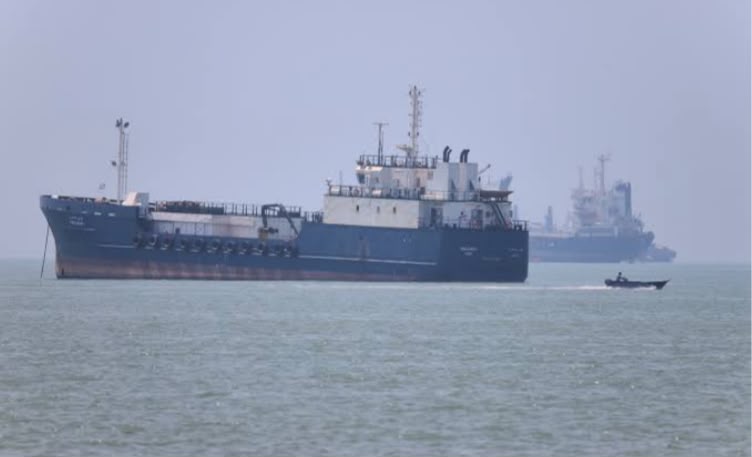
Iran has rejected US President Donald Trump’s claim that Washington has “total control” of the Strait of Hormuz, with Iranian military officials insisting that the strategic waterway remains under Tehran’s management.
The latest exchange comes amid continuing tensions between Iran and the United States over the crucial shipping route, which is a major passage for global oil and gas supplies. Reuters reported on Thursday that both countries are making competing claims over control of the strait. (Reuters)
Ebrahim Zolfaghari, spokesperson for Iran’s central military command, described US claims that ships were passing through Hormuz normally as “lies and fabrications.”
“The Strait of Hormuz is, as in the past, under the complete management and control of the Islamic Republic of Iran.”
He said commercial ships and tankers would not be allowed to pass through the waterway without Iranian military permission and supervision.
Trump claims US has control
Trump had claimed on Wednesday that the United States had taken control of the Strait of Hormuz.
“The US has total control over the Strait of Hormuz. I THINK WE WILL KEEP IT!”
He also described the US naval blockade as a “WALL OF STEEL”, saying Iran could do nothing to stop it.
The US has maintained a naval blockade around Iranian ports, while Washington says it intends to protect maritime navigation for non-Iranian vessels. (Reuters)
Iranian officials, however, continue to reject Washington’s claims.
Hossein Taeb, head of Iran’s paramilitary Basij forces, also said the strait remained under Iranian control.
“Today, you see that the Strait of Hormuz is under the management and control of the Islamic Republic.”
Iran warns US and Israeli vessels
Iranian Foreign Minister Abbas Araghchi accused the US of making another major miscalculation over the waterway.
“Now, an even bigger miscalculation on the Strait of Hormuz.”
Meanwhile, Iranian parliamentarian Behnam Saeedi said Israeli ships would not be allowed to pass through the strait and that US military vessels would also be barred.
The dispute is already having wider implications for global energy markets. Reuters reported that shipping through Hormuz remains heavily disrupted, with conflicting estimates over how much oil is currently moving through the waterway.
Iran and Oman have also discussed establishing an alternative route through the strait, although an agreement has not yet been finalised.
With both Washington and Tehran insisting on competing versions of who controls the strategic waterway, tensions over Hormuz remain a major concern for global energy supplies and international shipping.
Source: statements from Iranian military and government officials.