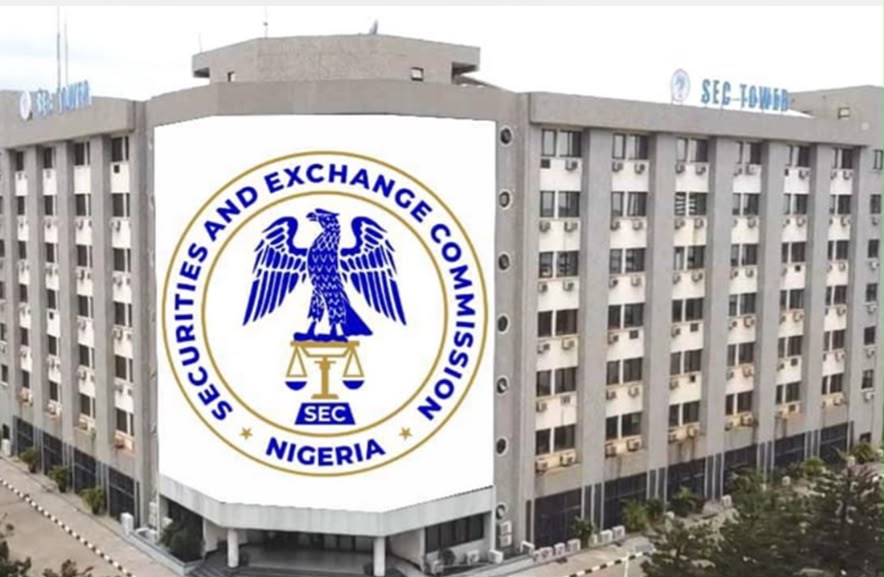
Nigeria’s Securities and Exchange Commission (SEC) has ordered operators in the country’s capital market to immediately freeze funds and other assets linked to an individual and three companies sanctioned by the United States over alleged financial links to ISIS and ISIS-West Africa.
The directive, contained in a “Notice of Sanction” circular issued by the SEC, requires Capital Market Regulated Entities (CMREs) to identify and freeze the affected assets without prior notice.
The commission also directed operators to report their actions to the Secretariat of the Nigeria Sanctions Committee.
Who is affected?
The individual named in the sanctions is Mukhtar Adamu Muhammad, also known as Mukhtar Adamu and Muhammad Mukhtar.
The three companies listed are:
- Generation Currency Bureau De Change Limited
- Manhattan Bureau De Change Limited
- Nine to Nine Exchange Bureau De Change Limited
According to the SEC, operators must identify any funds, assets or other economic resources belonging to the designated individual or companies and place them under immediate freeze.
SEC orders suspicious transactions to be reported
The directive goes beyond freezing the assets.
Capital market operators have also been instructed to report any suspicious transactions involving the sanctioned individual or entities to the Nigerian Financial Intelligence Unit (NFIU) for further analysis.
The SEC further directed operators to report cases where the names of the sanctioned parties match names appearing in financial transactions, regardless of whether those transactions took place before or after the sanctions notice was received.
|
Operators are also expected to stop dealing with the designated individual and companies and continue monitoring any related transactions.
Non-compliance could attract sanctions
The SEC warned that failure to comply with the directive would constitute a violation of Nigeria’s Investments and Securities Act, 2025, as well as its Anti-Money Laundering/Combating the Financing of Terrorism (AML/CFT) rules.
Regulated entities that fail to comply could face regulatory action, including fines, suspension of operations or revocation of registration.
The latest directive highlights Nigeria’s continued efforts to prevent its financial system from being exploited for terrorism financing, money laundering and other illicit financial activities.
Source: Securities and Exchange Commission (SEC), Nigeria.