The Federal Government has pledged to publish a detailed account of how funds saved from the removal of fuel subsidies and the foreign exchange (FX) subsidy have been spent, following growing public concerns over the impact of the economic reforms.
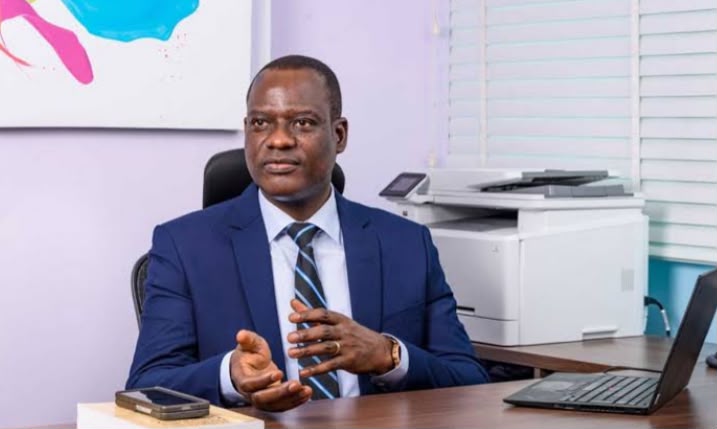
The Minister of Finance and Coordinating Minister of the Economy, Mr. Taiwo Oyedele, made the promise on Thursday during the 7th Africa Emerging Markets Forum in Abuja.
The assurance came after World Bank Group Chief Economist and Senior Vice-President for Development Economics, Indermit Gill, questioned whether Nigerians had seen the benefits of the reforms despite improvements in government revenue and a reduction in the fiscal deficit.
Gill noted that although the reforms had increased government income and reduced subsidy spending, many Nigerians remained unconvinced because it was unclear how the savings had been utilised.
He also commended the Central Bank of Nigeria (CBN) for reducing inflation from over 30 percent to below 15 percent, while stressing that stronger fiscal support from the government would be needed to sustain the progress.
Responding, Oyedele admitted that Nigerians had every right to ask how the subsidy savings had been used.
“There was a question about the subsidy savings. Where has it gone to? I’ve heard this question so many times. And guess what? It’s a valid question,” he said.
The minister revealed that the combined savings from the removal of fuel subsidies and what he described as the foreign exchange subsidy amounted to about five percent of Nigeria’s Gross Domestic Product (GDP).
“In a few days, you will see the detailed analysis, because we believe that we owe a duty to explain what we do to the Nigerian people. That’s what transparency looks like,” Oyedele added.
According to him, the reforms were introduced mainly to eliminate long-standing economic distortions rather than simply generate more revenue for the government.
He explained that a significant portion of the savings had been used to cover rising debt servicing costs, implement the new ₦70,000 national minimum wage, and fund expanded social intervention programmes, including the Nigerian Education Loan Fund (NELFUND).
Oyedele disclosed that more than 1.5 million students have benefited from tuition support and monthly stipends through the student loan programme.
The finance minister also defended the government’s decision to continue borrowing despite increased revenue, explaining that borrowing remains necessary whenever government expenditure exceeds available income.
“If you have a budget to spend 10 and your revenue is seven, you still need to borrow three,” he explained, adding that borrowing is acceptable as long as it delivers returns greater than its cost.
On concerns about rising poverty, Oyedele argued that the economic reforms did not create poverty but exposed structural weaknesses that had long existed.
“The reform itself was a reset. We were living in fiscal illusions. So, we needed to stop deceiving ourselves so the country can move forward,” he said.
He added that the government is now focused on converting macroeconomic stability into sustainable economic growth, job creation and improved living standards.
Oyedele further disclosed that the Federal Government is developing a new framework aimed at reducing the cost of capital without introducing fresh subsidies, saying the initiative would support investments while complementing the CBN’s efforts to control inflation.
Also speaking at the forum, CBN Director of Statistics, Dr. Okpanachi Moses, revealed findings from a study covering 36 Sub-Saharan African countries, which showed that food price volatility and inflation often reinforce each other, making it harder for monetary policy alone to control inflation.
He explained that because households in many African countries spend a large share of their income on food, increases in food prices quickly push up overall inflation.
Moses advised central banks, particularly in conflict-affected countries, to combine monetary policies with investments in food production and structural reforms to achieve lasting price stability.
Source: 7th Africa Emerging Markets Forum, Abuja.